
New investment projects announced in the manufacturing sector declined in the three months ended June 2023. The value of new projects was lower than in the March quarter, as well as the year-ago period, shows data from project tracker the Centre for Monitoring Indian Economy (CMIE). The new project announcements worth around Rs 85,000 crore in the manufacturing segment in June were a 48 per cent decline from the Rs 1.6 trillion in March and a 66 per cent decline from the Rs 2.5 trillion seen in June 2022.

Prime Minister Narendra Modi began his engagements in the US on Thursday by meeting with leading American CEOs from five different key sectors and highlighted the economic opportunities in India.

India must integrate more with East Asia by getting into regional trade arrangements, lower its tariff walls, and improve the quality of its workforce, suggests T N Ninan.

'Three manufacturing sectors can create jobs by the million: Apparel, food, and electronic assembly.' 'Let's talk to them and ask them what it would take to scale by a factor of ten,' suggests Naushad Forbes.

'The BJP's numbers in this government are almost the same as those enjoyed by the Congress under P V Narasimha Rao when the reform process was kicked off in 1991.' 'As before, the only constraints on the prime minister's actions are internal, not external.' 'They come from his own assessment of the political consequences of any action,' points out Mihir S Sharma.

After the draft data protection bill, the government is now all set to bring another key legislation -- Digital India Bill -- that will be made available for public consultation by the month-end, Minister of State for IT Rajeev Chandrasekhar said on Thursday. The Digital India Bill, which will replace the 22-year old Information Technology (IT) Act, will be contemporary and a modern piece of legislation, the Minister promised. The proposed bill, alongside the Digital Personal Data Protection (DPDP) Bill whose draft was released recently, will contribute to the evolving framework which is light on regulation, safeguards consumer rights and catalyses innovation, the minister said while speaking at CII Global Economic Policy Summit 2022.

as the FAME II deadline of March 31, 2024, nears, EV manufacturers are worried about their investments and future plans.

Do we have enough trained oncologists and medical professionals in India to man these over 4,500 beds in the public sector?

Prime Minister Narendra Modi on Saturday hard sold his government's reforms spanning from manufacturing to taxation to labour, saying they have changed the world perception about the country from 'why India' to 'why not India' and went on to quote record foreign investment during the pandemic as a testimony to that. Speaking at industry association Assocham's Foundation Week event, Modi also said agriculture reforms brought by his government six months back have started benefiting farmers. The reforms in the last six years have influenced in changing the sentiment of the industry from 'why India' to 'why not India' in investing.

US-based retail giant Walmart is looking to source toys, shoes and bicycles from Indian suppliers as the company is targeting to increase its exports from India to USD 10 billion annually by 2027. The company also wants to develop new suppliers in categories such as food, pharmaceuticals, consumables, health and wellness, and apparel and home textiles, a company spokesperson told PTI. Officials from the Bentonville-headquartered firm recently held a virtual meeting with several domestic toy manufacturers in India.

'Rather than taking a very short-term view on the markets, equity investing should be premised on longer term growth opportunities.'

The engineering and construction (E&C) sector delivered an excellent performance in the last two financial years (FY2021-22 or FY22 and FY23's nine-months) and there's reason to believe that FY24 will also see outperformance. The sector has emerged from the pandemic with stronger balance sheets and more rational cost structures. It has a big order book and it should see new order flows accelerate in FY24.

Welcoming the latest round of stimulus announced by Finance Minister Nirmala Sitharaman on Thursday, experts said the measures will support the economic recovery boosting demand, job creation and by providing funds to the MSME and stressed sectors. The fiscal impact of the stimulus is likely to be around 0.25-0.6 per cent of GDP in the current fiscal, they said.

The state is also the biggest market for TVS, another incumbent player, and together with Bajaj Auto, they accounted for 88 per cent of Maharashtra's total electric scooter sales last month. As many as 8,417 units were sold in Maharashtra in September. Bajaj Auto's contribution was 4,048 vehicles and that of TVS was 3,389, according to model- and state-wise data from the Society of Indian Automobile Manufacturers (Siam).

The Cabinet on Wednesday approved the production-linked incentive (PLI) scheme worth Rs 10,683 crore for textiles sector with an aim to boost domestic manufacturing and exports. The decision was taken in a meeting which was chaired by Prime Minister Narendra Modi. The Cabinet "has approved the PLI scheme for textiles for MMF (man-made fibre) apparel, MMF fabrics and ten segments/ products of technical textiles with a budgetary outlay of Rs 10,683 crore," Textiles Minister Piyush Goyal told reporters.

After several years of downgrades to the country's medium-term growth outlook, the estimates are likely to be upgraded now, Credit Suisse said in a report. The country's economy is showing signs of bottoming out, it said. According to the report, the consensus forecasts of GDP growth for FY2022 over FY2020 stopped falling after October 2020 (currently at (-) 1 per cent). Analysts at Credit Suisse expect these estimates to be revised upwards.
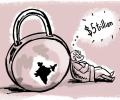
It would be a difficult task for the Indian economy to reach the $5-trillion mark a year before the International Monetary Fund (IMF) projection of 2026-27. Pankaj Chaudhary, minister of state for finance, said in the Rajya Sabha on Tuesday that the government is taking steps to make the country a $5-trillion economy at a date earlier than the IMF's projection. In that context, it would not be difficult to meet the projection in the third quarter of FY27.

Although India's share in the world toy trade has marginally improved, it still lags behind China's. Toys are not China's main item of export, but about two-thirds of the toys sold globally are from China. The world exported toys worth $73.2 billion in 2021: China accounted for 66.2 per cent, or $48.5 billion of that, out of which mainland China made up $46.1 billion and Hong Kong $2.4 billion.

The pharmaceuticals sector is expected to post a revenue growth of around 13.5 per cent and a net profit growth of 30.3 per cent for the third quarter of 2023-24 (FY24), riding on the approval for niche drugs in the US market, fall in raw material prices and correction in shipping rates. In the healthcare segment, hospitals are expected to post revenue growth of 13 per cent during the coverage, while net profit growth would be around 37 per cent, ICICI Securities said in a note. However, the performance may not be comparable on a sequential basis due to the offset of the festive season in Q3FY24, the analysts noted.
The government on Wednesday approved a production-linked incentive (PLI) scheme for the pharmaceutical sector, entailing an outlay of Rs 15,000 crore. The Union Cabinet, chaired by Prime Minister Narendra Modi, approved the scheme which will benefit domestic manufacturers, help create employment and is expected to contribute to the availability of a wider range of affordable medicines for consumers. The duration of the scheme would be from 2020-21 to 2028-29 and is expected to promote the production of high value products in the country and increase the value addition in exports, an official release said.

Finance Minister Nirmala Sitharaman is likely to strike a fine balance between being fiscally prudent and growth supportive when she presents her fourth straight budget on Tuesday, which is expected to have plans to boost spending to revive investment and create jobs. The Budget for the fiscal year starting April 1, 2022 is likely to raise spending on infrastructure to set the economy on a firmer footing. The stage for the Budget presentation was set by the Economic Survey stating that the government has the fiscal space to do more to support the economy that is forecast to grow at a healthy 8-8.5 per cent growth in the 2022-23 fiscal.
India will need $8 trillion (around Rs 588 lakh crore) of gross capital formation or new greenfield assets to become a $5 trillion (around Rs 368 lakh crore) economy by FY2027, a report said. The report by Deloitte said despite the COVID-19 disruption, FDI inflow into the country provides necessary optimism and display underlying strengths of the Indian economy. In FY2020-21, FDI inflows (including equity, re-invested earnings, and capital) amounted to a record $81.72 billion, 10 per cent higher than the previous financial year, it said.

Today, Vachani's public-listed company, Dixon Technologies, has gone beyond manufacturing just television sets. Armed with private equity funding from Motilal Oswal eight years ago, it has transformed itself into a Rs 4,400 crore electronic manufacturing services major, which now straddles lighting products, home appliances, feature phones, LED bulbs, amongst others. A two-part series looks at how two home-grown manufacturers are leveraging the govt's production-linked incentive scheme.

The Economic Survey 2022-23 (FY23), to be presented a day before Union Budget 2023-24 (FY24), is likely to project India's real gross domestic product (GDP) growth between 6 per cent and 7 per cent for FY24, Business Standard has learnt. The broader theme of the Survey could be on how India has dealt with two years of a global pandemic and the ongoing geopolitical disturbance, the strengths and weaknesses that emerged, and what lessons may be learnt. The much-awaited Survey will be the first one by Chief Economic Advisor V Anantha Nageswaran and his team in the finance ministry's economic division.

New projects fell 6.3 per cent in the December quarter compared with the September quarter. The value of new projects in the just-concluded quarter was Rs 2.1 trillion, according to the data from Centre for Monitoring Indian Economy (CMIE), which was lower than the Rs 2.2 trillion seen in the September quarter. It is, however, higher than Rs 1.5 trillion recorded for the quarter ended December 2020, the first year of the Covid-19 pandemic. This data ties in with the November data for core sector growth, an index of eight core industries, which grew at its slowest pace since early 2021.

Chief Economic Advisor V Anantha Nageswaran on Thursday said the economy is expected to grow at 6.5 per cent in the current fiscal notwithstanding deficient rains in August. India recorded economic growth of 7.8 per cent in the April-June quarter of 2023-24 against 13.1 per cent in the year-ago period. India's economy in Q1 grew at the fastest pace in a year, on the shoulders of a boost in capital expenditure both at central and state levels, along with stronger consumption demand, especially in rural areas, and improved performance in the services sector, he said.

Apple's three vendors in the country have hit the milestone of creating 30,000 new direct jobs since the production-linked incentive (PLI) scheme for mobile devices kicked off in April 2021. Based on the government's estimate that one direct job in the electronics industry helps to generate three indirect ones, Apple's vendors, Foxconn Hon Hai, Wistron and Pegatron, are close to creating 100,000 direct and indirect jobs. The direct jobs that the vendors have created account for a fourth of Apple's commitment to generate 60 per cent of the new direct jobs out of the 200,000 jobs targeted by the government under the PLI scheme within five years.

The focus of the company would be to develop its capability across segments of injectables, vaccines, biosimilars, inhalation and APIs to drive growth.

'With China falling out of favour, India is where investors see the demographic and digital dividend apart from the benefits of reforms playing out.' 'Your prime minister has also done a great job of sharing this story with the world.'

Chief Economic Adviser K V Subramanian on Wednesday said India is expected to hit a growth rate of 6.5-7 per cent in 2022-23 and accelerate further to 8 per cent in the subsequent years on the back of reforms undertaken by the government. He also said the government is expected to meet the fiscal deficit target of 6.8 per cent in the current fiscal despite pressure on revenue collections.

The Softbank-backed company has set a price band of Rs 72 to Rs 76 per share for the maiden share sale and is expected to test the appetite for new-age loss-making companies.

Seven months after it was launched in India, Apple is expected to start manufacturing the iPhone 13 at the Foxconn plant in Sriperumbudur near Chennai from April, according to sources. The phones will be for both the domestic and export market. The production of the iPhone 13 in the Chennai plant was meant to start from January but had to be postponed after Apple suspended production following protests in December by women workers about food poisoning. An Apple spokesperson did not respond to an e-mail query.

Stock market investors are expecting a balanced Budget with a focus on job creation, increased spending on infrastructure, reigning in the deficit, and bringing the economy back on track, experts said on Wednesday. Stock markets have been subdued in the run-up to the Union Budget with BSE's benchmark Sensex is almost flat so far this month. Even the corporate earning season failed to excite the markets, while some indices like IT and bankex have seen some positive movements.

For fiscal year FY23, the 2022 Union Budget had targeted a capex outlay of Rs 7.5 trillion, which is 35.4 per cent higher than the FY22 Budget Estimate of Rs 5.54 trillion.

India's exports contracted 12.2 per cent to $34.48 billion in December 2022, mainly due to global headwinds, and the trade deficit widened to $23.76 billion during the same period, according to official data released on Monday. Imports in December 2022 also declined 3.5 per cent to $58.24 billion as against $60.33 billion in the year-ago period. In December 2021, exports stood at $39.27 billion and the trade deficit was at $21.06 billion.

With Tata Motors subsidiary taking over Ford's passenger vehicle (PV) manufacturing unit at Sanand in Gujarat, uncertainty over the future of Ford's Maraimalai Nagar unit in Tamil Nadu continues, with workers protesting on Thursday demanding a better severance package. There are over 2,000 employees working at the unit. On Thursday, there was a meeting between agitating employees and the state labour department. The workers started protests at the Chennai unit after Tata Passenger Electric Mobility signed a tripartite memorandum of understanding with Ford India and the Government of Gujarat for acquisition of Ford's PV manufacturing plant at Sanand.

It also promised to launch the 'Poshane' scheme through which every BPL household will be provided with half litre 'Nandini' milk every day and five kg 'Shri Anna - siri dhanya' through monthly ration kits.

Tata Motors on Monday said its subsidiary and Ford India have inked a pact with the Gujarat government to acquire FIPL's Sanand vehicle manufacturing plant. Tata Passenger Electric Mobility Ltd (TPEML) -- a subsidiary of Tata Motors -- and Ford India Pvt Ltd (FIPL) have today signed a memorandum of understanding (MOU) with the Gujarat government for the potential acquisition of FIPL's Sanand vehicle manufacturing facility, including land, buildings, vehicle manufacturing plant, machinery and equipment, Tata Motors said in a regulatory filing. The MoU also includes the transfer of all eligible employees of FIPL Sanand's vehicle manufacturing operations, subject to the signing of definitive agreements and receipt of relevant approvals, it added.

Logistic players have seen a sharp correction at the bourses over the past six months as intense competition from new-age-tech startups, higher freight rates, and weak macros dented listed players' growth outlook. Analysts warn that the emergence of tech-based startups could weigh on organised players' profit-pool, and can potentially erode their market share. Thus, a stock-specific strategy would be prudent at this juncture with focus on companies that are rapidly innovating and investing in technology.

In absolute numbers, India had only 211 start-ups compared to 970 in the US.
